
Few parts of early parenthood feel as repetitive as washing bottles. One feed ends, another one seems to be waiting around the corner, and somewhere in between there is a sink full of tiny parts: bottles, nipples, caps, rings, and sometimes pump pieces too. It is no surprise that parents often ask how often to sterilize bottles, especially when they are already cleaning them several times a day.
The answer can feel confusing because advice is not always the same everywhere. Some parents are told to sterilize everything daily. Others hear that hot soapy water is enough after the first use. The truth sits somewhere in the middle. Clean bottles matter every time, while sterilizing adds an extra layer of protection in certain situations. Understanding the difference can make bottle care feel less stressful and more practical.
Cleaning and Sterilizing Are Not the Same Thing
Before deciding how often to sterilize bottles, it helps to separate cleaning from sterilizing. Cleaning removes milk, formula, saliva, and visible residue. This is the step that should happen after every feed. A bottle that has been used should not simply be rinsed and left for later, because milk can dry inside the bottle and germs can grow quickly.
Sterilizing, sometimes called sanitizing, goes further. It uses steam, boiling water, a sterilizing solution, or a dishwasher sanitizing cycle to reduce germs more deeply. It is not a replacement for washing. Bottles should be cleaned first, then sterilized if needed. Sterilizing a bottle that still has milk residue inside is not truly effective, because the dirt and film can protect germs.
This difference matters because daily life with a baby is already busy. You may not need to sterilize after every single feed in every situation, but you do need to clean bottles properly every time they are used.
How Often to Sterilize Bottles in Everyday Use
For many healthy full-term babies, bottles should be sterilized before the first use, then cleaned thoroughly after every feeding. After that, daily sterilizing may be helpful, especially during the early months, but it may not always be necessary if the bottles are washed well, dried properly, and stored in a clean place.
However, there are times when sterilizing should be done more often. If your baby is younger than two or three months, was born prematurely, or has a weakened immune system, daily sterilizing is usually recommended as an added safety step. Young babies are still building their immune defenses, so extra care with feeding equipment makes sense.
Some parents choose to sterilize once a day simply for peace of mind. That is perfectly reasonable. A routine that involves washing after every use and sterilizing the day’s bottles in one batch can be easier than trying to sterilize one bottle at a time.
Why New Bottles Should Be Sterilized First
New does not always mean clean enough for a baby. Bottles may have been handled during manufacturing, packaging, shipping, or storage. Even if they look spotless, sterilizing them before the first use is a sensible first step.
This first sterilization applies to bottles, nipples, caps, rings, and any feeding parts that will touch milk or the baby’s mouth. After that, the routine depends on your baby’s age, health, and your household setup. If you have safe water, a clean washing area, and a reliable way to dry items fully, your routine may be simpler. If not, sterilizing more regularly can provide extra reassurance.
When Daily Sterilizing Is a Good Idea
Daily sterilizing is especially useful in the newborn stage. Newborns feed often, and their digestive systems are still developing. Milk and formula are nourishing, but they can also become a place for bacteria to grow if bottles are not handled carefully.
Daily sterilizing is also wise if your baby has recently been sick, if bottles have been left sitting too long, or if your kitchen sink and counters are difficult to keep clean. Travel is another time when extra sterilizing can help. When you are away from your usual routine, using unfamiliar water, or washing bottles in shared spaces, a more careful approach is sensible.
Parents using powdered formula may also prefer stricter bottle hygiene, because formula preparation involves several steps where cleanliness matters. Clean hands, clean surfaces, and clean bottles all work together.
How to Clean Bottles Before Sterilizing
A good routine starts as soon as the feeding is finished. Any leftover milk or formula should be discarded if it has been sitting too long or if the baby has already drunk from the bottle. Used bottles should be taken apart completely so every piece can be washed.
Warm water and dish soap are usually enough for cleaning. A clean bottle brush can help reach the bottom and sides of the bottle, while a smaller nipple brush can clean the teat more carefully. It is important to wash all parts, not just the bottle itself. Milk can collect around rings, caps, and nipple openings.
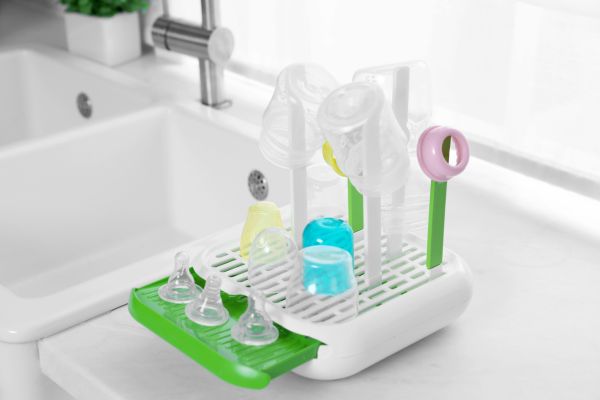
After washing, rinse everything well under clean running water. Let the pieces air dry on a clean drying rack or unused paper towel. Drying matters more than many people realize. Damp, closed spaces can encourage germs, so bottles should be fully dry before they are stored.
Common Ways to Sterilize Baby Bottles
There are several safe ways to sterilize bottles, and the best one is usually the method you can do correctly and consistently. Boiling is a traditional option. Bottles and parts are placed in boiling water for the recommended time, making sure everything stays fully submerged and no air pockets are trapped.
Steam sterilizers are another common choice. They use hot steam to sterilize bottles and small parts. Some parents like them because they are quick and simple, especially when many bottles are used each day. Microwave steam bags or containers can also work, as long as the instructions are followed carefully.
Cold water sterilizing solutions are used in some homes too. These require the correct amount of solution and the right soaking time. The equipment should stay fully covered by the solution, and the solution should be changed according to the instructions.
Some dishwashers have a sanitizing cycle or heated drying cycle that can help sanitize feeding items. If using a dishwasher, small parts should be placed in a closed basket or mesh bag so they do not fall into the machine.
Safe Storage After Sterilizing
Sterilizing is only helpful if clean items stay clean afterward. Once bottles are sterilized, avoid touching the inside of the bottle or nipple. Clean hands are essential. If bottles are removed from the sterilizer, they should be assembled carefully and stored in a clean, covered place.
Many sterilizers keep items sterile for a certain number of hours if the lid remains closed. Once the sterilizer is opened, the clock effectively changes because the items are exposed to the air and hands. This is why some parents sterilize bottles in the evening, then assemble them for the next day.
Avoid drying bottles with a used kitchen towel. Towels can carry germs, even when they look clean. Air drying is usually safer.
Mistakes That Can Make Bottle Care Less Safe
One common mistake is leaving used bottles in the diaper bag or beside the bed for hours. Milk residue can spoil, and the smell alone is enough to remind most parents why quick cleaning matters. Another mistake is rinsing bottles and assuming they are clean. Rinsing removes some milk, but it does not clean the bottle properly.
It is also easy to forget small parts. Nipples, rings, caps, and valves need attention because milk can hide in tiny spaces. If a nipple looks cloudy, sticky, cracked, or damaged, it should be replaced. Damaged parts are harder to clean and may not work safely.
Overcrowding a sterilizer or dishwasher can also reduce effectiveness. Water or steam needs to reach all surfaces. If parts are packed too tightly, some areas may not be properly cleaned or sterilized.
When You Can Relax the Routine
As babies grow, their immune systems become stronger, and many parents gradually feel comfortable sterilizing less often. By the time a baby is older, healthy, and putting toys and hands in their mouth, bottle sterilizing may feel less urgent than it did in the newborn stage.
Still, bottle cleaning should remain careful. Milk residue, especially formula, should not be left sitting. Bottles should always be washed after use, dried fully, and stored cleanly. If your baby becomes ill, or if your doctor advises extra precautions, returning to daily sterilizing may be a good idea.
Conclusion
So, how often should you sterilize baby bottles? At minimum, sterilize new bottles before the first use, clean bottles thoroughly after every feeding, and consider daily sterilizing during the early months or whenever your baby needs extra protection. For newborns, premature babies, or babies with weaker immune systems, daily sterilizing is a smart and often recommended habit.
Bottle care does not have to become a source of panic. A steady routine is enough: wash well, rinse well, dry fully, sterilize when needed, and store everything cleanly. In the long rhythm of feeding, burping, changing, and soothing, clean bottles are one small but meaningful way to protect your baby’s health.