You're Taxing Yourself for Every Small Joy — Here's How to Stop

Photo: Shixart1985, CC BY 2.0, via Wikimedia Commons
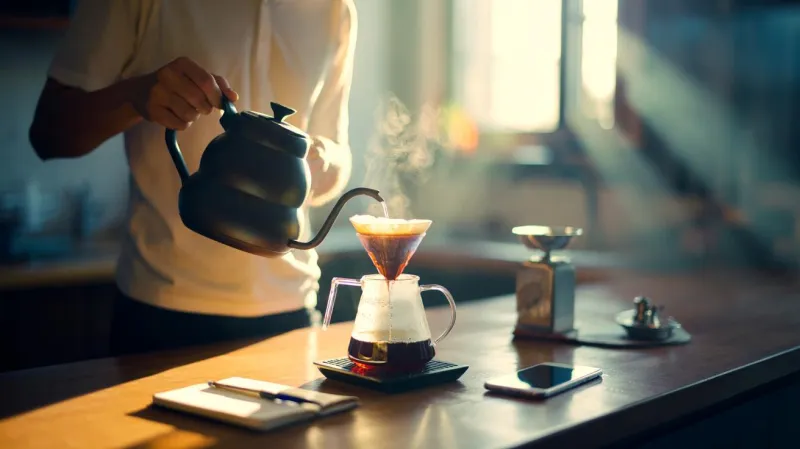
Picture this: It's a Tuesday afternoon. The sun is doing that golden late-day thing through your window. You've got a fresh cup of coffee, no meetings for the next 45 minutes, and absolutely nothing urgent on fire. For about eleven seconds, you feel it — that soft, uncomplicated happiness.
Then the bill arrives.
Not a real bill. The invisible one. The one that sounds like shouldn't you be doing something? or you'll pay for this later or, the classic American gut-punch, you haven't really earned this yet.
Welcome to what we're calling the Tiny Pleasures Tax — that reflexive guilt or justification loop that kicks in every time you try to enjoy something small, simple, and completely free of productivity points. It's sneaky, it's exhausting, and most of us have been paying it so long we don't even notice it anymore.
Let's talk about where it comes from — and more importantly, how to stop writing the check.
Where This Guilt Actually Comes From
America has a complicated relationship with rest and pleasure. The Puritan work ethic didn't just shape the country's economy — it burrowed deep into the cultural psyche. Somewhere along the way, the idea that hard work equals virtue got flipped into its shadow belief: that ease, leisure, or simple enjoyment without prior suffering is somehow morally suspect.
Fast forward a few centuries and add hustle culture, productivity apps, and a social media feed full of people optimizing their morning routines, and you've got a perfect storm. Enjoyment started needing a reason. A walk became "active recovery." Reading became "personal development." Even sleep got rebranded as a performance tool.
Psychologists call the underlying pattern hedonic guilt — the discomfort we feel when we experience pleasure that doesn't feel "justified" by prior effort or suffering. Studies have shown that Americans, in particular, tend to associate busyness with self-worth, which means the inverse becomes true too: stillness starts to feel like failure.
The result? We tax ourselves constantly. Every small joy comes with a surcharge of guilt, a need to justify it, or a mental promise to "make up for it later."
The Things We Tax the Most
The Tiny Pleasures Tax shows up in surprisingly ordinary moments. See if any of these land:
- The long shower. You know the one — where you actually stand there and let the hot water do its thing. Then you start calculating how much time you've "wasted."
- The unscheduled afternoon. A couple of free hours appear and instead of enjoying them, you spend them anxiously wondering if you should be doing something more productive.
- The indulgent snack. Not a binge, not a habit — just a cookie on a Wednesday because cookies are delicious. Followed immediately by a mental tally of what you'll need to do to "cancel it out."
- Doing absolutely nothing. Sitting on the porch. Watching birds. Letting your mind wander. This one gets taxed the hardest, because there's no output to show for it.
None of these things are harmful. All of them are human. But we've been conditioned to treat them like indulgences that need to be offset rather than moments that simply deserve to exist.
Why Small Joys Are Actually Non-Negotiable
Here's the thing the productivity gospel conveniently leaves out: small pleasures aren't the opposite of a well-lived life. They are a well-lived life, stitched together one ordinary moment at a time.
Research in positive psychology consistently shows that frequent small positive experiences contribute more to overall happiness than infrequent big ones. Translation: the daily coffee you actually savor matters more to your long-term wellbeing than the annual vacation you spend half of recovering from stress.
And neurologically? Your brain needs these micro-moments. Brief experiences of pleasure, ease, and sensory enjoyment activate your parasympathetic nervous system — the one responsible for calming you down, restoring your energy, and helping you think clearly. When you guilt-trip yourself out of these moments, you're not being virtuous. You're literally depleting the resource that makes everything else possible.
Small joys aren't a reward for surviving your to-do list. They're fuel.
How to Actually Stop Paying the Tax
Unlearning a deeply ingrained cultural belief isn't a weekend project. But you can start chipping away at it with some intentional shifts.
Name the tax when it shows up. When you feel that pang of guilt mid-pleasure, just notice it. Say to yourself, oh, there's the tax. Naming it creates a tiny bit of distance between the feeling and the belief. You don't have to argue with it — just observe it like you'd observe a weird ad that popped up on your phone.
Stop justifying joy to yourself. You don't need to explain why you wanted to sit in the sun for twenty minutes. You don't need to frame your afternoon walk as "cardio." Joy doesn't require a cover story. Practice letting a small pleasure just be a small pleasure, full stop.
Build micro-rituals you protect. Pick two or three small pleasures that genuinely light you up — a morning stretch, a real lunch break away from your desk, five minutes of doing nothing after dinner — and treat them with the same respect you'd give a work meeting. They go in the calendar. They don't get bumped.
Audit your language. Notice when you say things like "I let myself" or "I allowed myself" to enjoy something. That framing implies you needed permission. Try swapping it for "I enjoyed" and see how that lands differently.
Borrow from the European playbook. Americans aren't the only people on earth, and plenty of cultures treat leisure and pleasure as baseline human needs rather than earned rewards. France has a concept called joie de vivre — joy of living — that's literally built into the cultural identity. Italy has dolce far niente — the sweetness of doing nothing. These aren't lazy philosophies. They're wise ones.
The Real Cost of Never Letting Yourself Off the Hook
Here's the irony of the Tiny Pleasures Tax: it doesn't actually make you more productive, more virtuous, or more worthy. It just makes you more depleted and less present in your own life.
When you're constantly paying the guilt surcharge on every small moment of happiness, you start moving through your days in a kind of low-grade dissatisfaction. Nothing feels like enough because you've trained yourself to believe it shouldn't. You become someone who is technically alive but not really living — always deferring the good stuff to some future version of yourself who has finally earned it.
That version of yourself never shows up, by the way. Because the goalposts keep moving.
The warm cup of coffee on a slow morning? That's not a luxury. That's your life. The midday walk where you notice the way the light hits the leaves? That's your life. The unscheduled hour where you read something just because it's interesting? Still your life.
You don't have to earn any of it. You just have to stop taxing yourself for it.
Start small. Enjoy the life, baby — no receipt required.