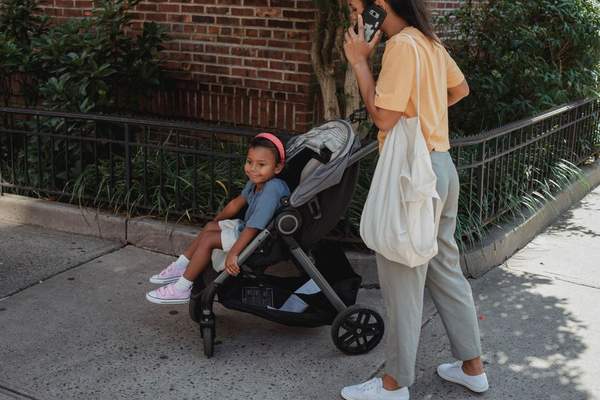

If there’s one baby registry trend everyone’s talking about heading into 2026, it’s the modular stroller. Brands like UPPAbaby have turned the humble stroller into a full system that grows and adapts with your family, and registries are taking notice. But is a modular setup actually worth the investment, or is a traditional stroller still the smarter choice for most parents? Let’s break down exactly how these two options compare, so you can register for (or buy) the right one the first time.
What’s the Difference Between Modular and Traditional Strollers?
A traditional stroller is pretty much what it sounds like: a single-purpose frame designed to push your baby around, usually with a seat that reclines and maybe a bassinet attachment if you’re lucky. It does one job, and it does it well.
A modular stroller, on the other hand, is built around a central stroller frame that accepts multiple attachments — an infant car seat, a bassinet, a toddler seat, and sometimes even a second seat for a sibling. Instead of buying separate gear for each stage, you’re investing in one base system that evolves as your child grows. This is exactly why modular setups are being flagged as a top registry trend for 2026 — they consolidate years of baby gear into a single, adaptable purchase.
Travel System Strollers vs. True Modular Systems
It’s worth clearing up a common point of confusion here. A travel system stroller typically refers to a stroller paired with a matching infant car seat, sold as a bundle. That’s convenient, but it’s not quite the same as a true modular system. A convertible stroller or modular setup goes further, letting you swap in bassinets, toddler seats, and even double-seat configurations on the same frame over several years — not just through infancy.
The Case for Modular Strollers
Modular systems, like the UPPAbaby Vista, have earned their reputation for a reason. Here’s what tends to draw families in:
Longevity
A good modular frame can realistically take you from your baby’s first ride home from the hospital through toddlerhood, and in many cases, through a second child too. That kind of longevity is hard to match with a single-purpose stroller.
Flexibility for Growing Families
If you’re planning on more than one child, a modular frame that converts to a double stroller can save you from buying an entirely separate double stroller down the line. That’s a meaningful cost and storage saving over several years.
Fewer Purchases Overall
Instead of buying a bassinet stroller, then a toddler stroller, then a double stroller separately, you’re buying attachments for one frame. For many families, that ends up being more economical in the long run, even though the upfront cost is higher.
The Case for Traditional Strollers
Modular isn’t automatically the right answer for everyone, though. Traditional strollers still make a lot of sense in certain situations.
Lower Upfront Cost
Traditional strollers are almost always cheaper out of the box. If you only need a stroller for a year or two, or you already own separate baby gear, that lower entry price can be hard to justify moving away from.
Simplicity
There’s something to be said for a stroller that just works, without attachments to click in, swap out, or store when you’re not using them. For parents who value grab-and-go simplicity, a traditional single-purpose stroller can genuinely be less hassle.
Lighter and More Compact
Because they’re built for one job, traditional strollers are often lighter and fold down smaller than modular systems, which can matter a lot for city living, frequent air travel, or smaller cars.
Which One Should You Register For?
If you’re building a baby registry and expecting to use your stroller heavily for several years, or you’re planning multiple children, a modular system is worth the higher price tag on your registry list. It’s exactly why gear like the UPPAbaby Vista keeps showing up as a top registry pick for 2026 — it front-loads the investment so you’re not buying new stroller gear every stage.
If you want something simpler, more budget-friendly, or you’re mainly looking for short-term convenience, a traditional stroller or a straightforward travel system stroller pairing is still a completely reasonable choice. Neither option is objectively “better” — it really comes down to how long you need the gear to last and how much flexibility you want built in from day one.
Frequently Asked Questions
Is a modular stroller worth the extra cost?
For families who plan to use it for multiple years or multiple children, yes — the cost per year of use often ends up lower than buying separate strollers for each stage. For short-term use, a traditional stroller may be more cost-effective.
Can a modular stroller replace an infant car seat?
Not on its own. Most modular systems are designed to work with a compatible infant car seat that clicks onto the stroller frame, effectively turning it into a travel system stroller for the newborn stage.
Do modular strollers work for two children?
Many do. Several modular frames, including the UPPAbaby Vista, offer add-on seats that convert the single stroller into a double stroller, which is one of the biggest draws for growing families.
Are traditional strollers less durable than modular ones?
Not necessarily. Durability depends more on build quality than on whether the stroller is modular. A well-made traditional stroller can last just as long as a modular one — it simply won’t adapt to different stages or attachments the way a convertible stroller does.
Final Thoughts
There’s no universal right answer between modular strollers and traditional strollers — only the right answer for your family’s stage, budget, and plans. If you want one setup that grows with you for years, a modular system earns its spot as a 2026 registry favorite. If you’d rather keep things simple and affordable, a traditional stroller will still get the job done beautifully. Either way, knowing the real differences up front means you’ll register for gear you’ll actually use, not gear you’ll outgrow in six months.