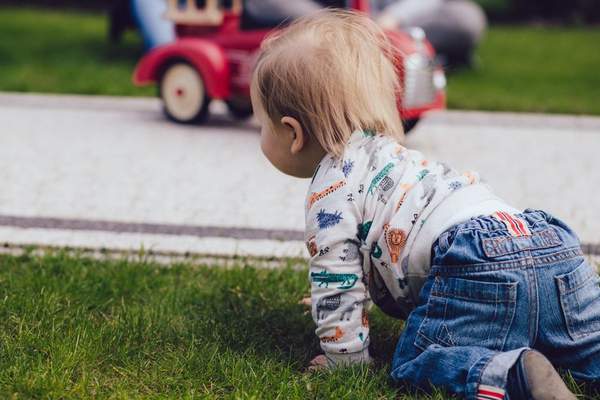

Crawling rarely begins with one dramatic moment. It develops through small changes: stronger head control, longer floor play, determined reaching and plenty of wriggling. Spotting the early signs your baby is ready to crawl helps you understand what they are practising and offer safe opportunities to build confidence.
Most babies begin crawling at around 7 to 10 months, but development is not a race. Some crawl earlier, some later, and some move by rolling, bottom-shuffling or pulling themselves along before walking. What matters most is your baby’s overall progress in movement, strength and curiosity, not whether they use one “correct” crawling style.
When Do Babies Usually Start Crawling?
Crawling is part of a wider sequence of gross motor skills. Babies need strength and coordination to control their head, support their upper body and shift weight between their limbs. The NHS says crawling often begins at around 7 to 10 months, although not all babies crawl. Belly-crawling, moving backwards and bottom-shuffling can also be normal.
Key Signs Your Baby Is Ready to Crawl
Stronger Head and Neck Control
During tummy time, your baby may lift their head for longer, look from side to side and hold their chest higher. This shows that the neck, shoulder and upper-back muscles needed for mobility are becoming stronger.
Pushing Up on Their Arms
You may see your baby press through their forearms or straighten their arms while lying on their tummy. These little “baby push-ups” build the strength needed to support their body while reaching or moving one arm forward.
Rolling More Confidently
Rolling from back to tummy and tummy to back shows growing trunk control and body awareness. Your baby may even use rolling as an early way to reach a toy or cross part of a play mat.
Sitting With Less Support
Independent sitting is not essential before crawling, but better balance often appears around the same stage. Your baby may lean on their hands, recover after wobbling or turn to reach an object, strengthening the core.
Pivoting and Reaching for Toys
A baby preparing to crawl often becomes more determined to reach interesting objects. While on their tummy, they may pivot in a circle, stretch one arm forward or push with their toes. Their effort may send them backwards at first, but that is still useful practice.
Getting Onto Hands and Knees
Moving into an all-fours position is one of the clearest signs baby is ready to crawl. Your baby may hold the pose briefly, drop onto their tummy and try again. They are learning to balance their weight while strengthening their shoulders, hips and core.
Rocking Back and Forth
Many babies rock forwards and backwards on hands and knees before crawling. This helps them practise shifting weight. They may lift one hand, move a knee or suddenly lunge forward as coordination gradually develops.
Trying Early Forms of Movement
Commando crawling, scooting and pushing backwards all show developing mobility. Your baby is learning that effort can move them towards a person, toy or new part of the room.
How to Encourage Crawling Safely
Offer Supervised Floor Play
Floor time gives babies room to explore movements that are difficult in seats or carriers. Use a firm, clean surface with space to roll, turn and reach. Stay nearby and follow your baby’s cues, especially when they become tired or frustrated.
Build Tummy Time Gradually
Current UK physical activity guidance recommends at least 30 minutes of tummy time spread throughout the day for babies who are not yet mobile. It should only happen while your baby is awake, alert and supervised. Short sessions can be easier than one long session, particularly when tummy time is still unfamiliar.
Lie facing your baby, talk or sing, and place a toy nearby. A small rolled towel under the armpits may help. Always place babies on their back for sleep; tummy time is for awake periods only.
Use Toys as Gentle Motivation
Place an appealing toy just beyond your baby’s immediate reach, but close enough that success feels possible. This can encourage reaching, pivoting and pushing. Avoid repeatedly moving it farther away, as an enjoyable challenge can quickly become frustrating.
Get Down on Their Level
Your face may be more motivating than any toy. Sit or lie a short distance away, smile and encourage your baby to move towards you. You can place your hands gently behind their feet to provide something firm to push against, but never force their limbs or move their body for them.
Allow Plenty of Free Movement
Bouncers, seats and carriers are useful, but long periods reduce opportunities for movement. The NHS advises limiting baby walkers, bouncers and seats to 20 minutes at a time. Walkers are not needed for learning to crawl or walk.
Prepare a Safe Crawling Space
A baby can become mobile unexpectedly, so babyproof early. Remove choking hazards, secure cords and heavy furniture, and fit suitable stair gates. Keep hot drinks, medicines, cleaning products and batteries out of reach.
Check the floor from your baby’s level because coins, hair accessories and packaging pieces are easy for adults to miss. Once crawling begins, close supervision remains essential; speed and curiosity can increase surprisingly quickly.
What If Your Baby Is Not Crawling?
A baby not crawling at the same age as others is not automatically a concern. Some skip traditional crawling and roll or bottom-shuffle instead. Consider whether they are gaining strength, reaching, sitting, changing position or finding another way to move.
Speak to your health visitor or GP if your baby is not showing signs of moving by 12 months, seems unusually stiff or floppy, uses one side much more than the other, loses a skill they previously had, or you are worried for any reason. A professional can assess development as a whole rather than judging one milestone in isolation.
Frequently Asked Questions
Does Rocking on Hands and Knees Mean Crawling Is Close?
It often means your baby is practising the balance and weight shifts needed for crawling. Some babies crawl within days, while others rock for several weeks or choose another movement style first.
Is It Normal for a Baby to Crawl Backwards First?
Yes. Arm strength may initially push a baby backwards before they coordinate their knees and hips well enough to move forwards.
Can I Teach My Baby to Crawl?
You cannot force the milestone, but you can encourage crawling through supervised floor play, tummy time, reachable toys and freedom to move. Let your baby lead.
Do All Babies Crawl Before Walking?
No. Some bottom-shuffle, roll or move directly towards pulling up and walking. Missing classic crawling does not always indicate a problem.
Supporting the Crawling Milestone With Confidence
The most useful signs your baby is ready to crawl are not tied to one exact date. Stronger head control, pushing up, rolling, reaching, rocking and experimenting with movement all show that important skills are developing. Provide safe floor space, regular tummy time and patient encouragement, then let your baby discover their own route to mobility. Every attempt, including the backwards ones, is part of learning.